The Spix's macaw, which is the blue macaw that inspired the cartoon character Rio, was declared officially extinct in 2018, although there have been some controversial efforts to reintroduce the bird in some parts of the world.
Although the Spix's macaw is now considered extinct, there are other species of this bird, including standard and mini macaws, that are not endangered and are worthy of study and those that make attractive and popular pets.
Read on for more information on the status of the blue macaw, as well as details of other parrot species.
About the Macaw
Parrots are birds belonging to the Psittacoidea genus of birds. They include everything from parakeets to much larger birds, with the largest of these being the various species of macaw. Macaws are usually found in South America and Mexico and are described as being New World parrots. They are most often found in rainforests, although small populations may be found in other habitats.
Although there are more than 350 species of parrot, only around 20 of these are a type of macaw. Unfortunately, most of these species of macaw are considered endangered, with the greatest threats being a loss of habitat and hunting for sale in the pet industry.
Image Credit: Danny Ye, Shutterstock
About the Spix's Macaw
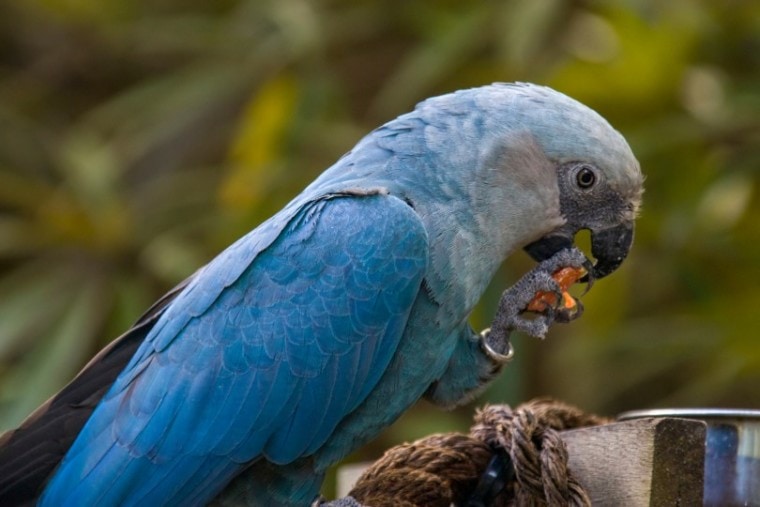
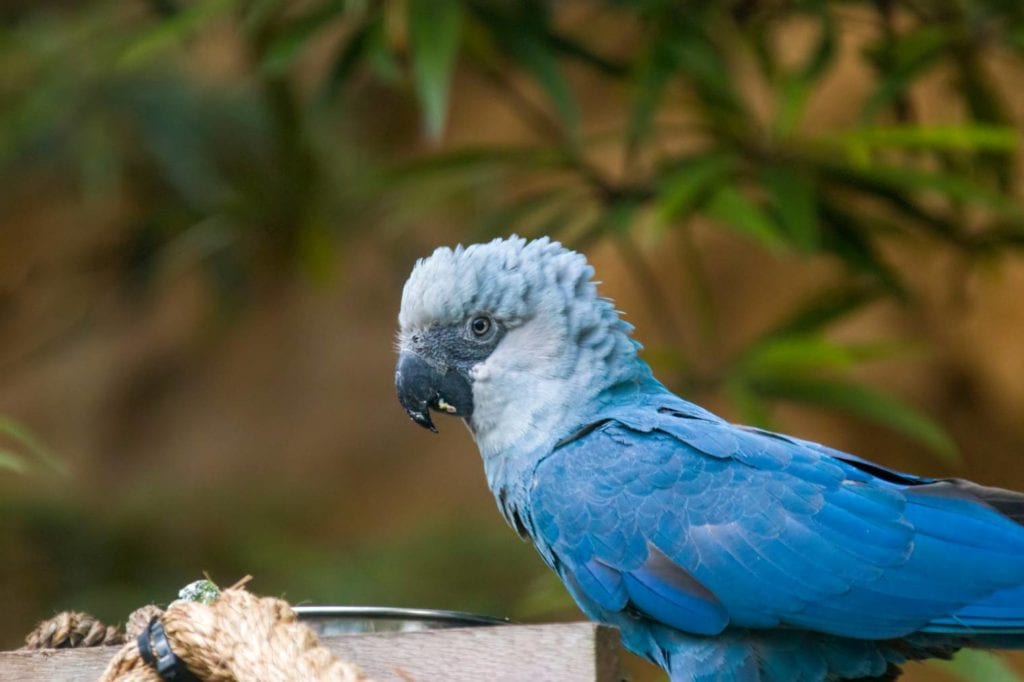
Spix's macaw is a species of macaw. It is native to Brazil and was the inspiration behind the animated film, Rio. It has a life span of around 30 years, up to nearly 40 years. It is a small macaw and, as suggested by the title "little blue macaw", it has a light blue color. As is typical of macaws, it has a band of featherless skin on the face, and the bird gets lighter as it ages.
The Spix's macaw usually lives as one of a pair or part of a very small group. They live together usually among tall treetops and are considered shy birds.
The species is known for being a very good mimic. In captivity, it is known for mimicking the voice and words of its owners, so is considered a good talker. They are noisy in the wild and when kept in captivity, and they can be considered difficult to keep because they are shy and they are arboreal, which means that they need a tall cage so that they can hide in tree leaves and branches.
Extinction
Unfortunately, the little blue macaw is now officially considered extinct. It lived in a very small area, and this area was threatened by human growth and habitat destruction. The bird was also hunted for the bird trade, although many of the birds died in transit and before they were delivered to keepers.
The breed was officially declared extinct in 2018 following a study by BirdLife International. The report specifically highlighted the plight of mainland birds, pointing out that these were under greater threat than island birds, unlike in previous reports. The report fingered climate change and the expansion of human living areas as being the greatest threats faced.
The report claims that there are only around 160 Spix's macaws in captivity and that there are no known examples of the breed in the wild.
See Also: Glaucous Macaw Bird Species
Image credit: Danny Ye, Shutterstock
Brazilian Attempts at Repopulation
However, in 2020, the Association for the Conservation of Threatened Parrots announced that it was funding the reintroduction of 52 Spix's macaws into the wild. The group said that the birds would be released in 2021 after they were allowed some time to adapt to their new surroundings. Unfortunately, the release was marred in controversy, with the group's founder, Martin Guth, having previously come under fire for running a private collection of threatened birds.
Other Popular Macaw Breeds
The Spix's macaw was popularized by the film Rio. Other popular macaw breeds include:
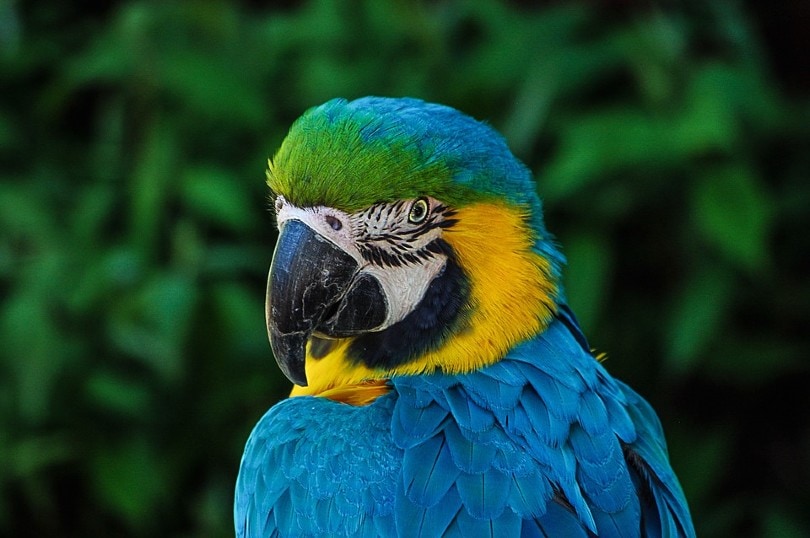
1. Blue And Gold Macaw
Image Credit: 192635, Pixabay
The blue and gold macaw is a very popular pet bird. It grows to about 3 feet from beak to the tip of its tail, which makes it a large breed. It is clever, tends to be friendly, and is a very loud bird with calls that can include mimicry of human words and noises. This is not considered a good bird for beginners, however, because it can be very loud with a piercing shriek sound and it has intensive social requirements that mean it needs to be allowed out of its cage for hours each day. Its size means that it also needs a large cage and plenty of space if the blue and gold macaw is to flourish and thrive.
2. Greenwing Macaw
Image Credit: LINO IGNACIO, Pixabay
The greenwing macaw is another recognizable macaw breed. It is considered a sweet and loving bird that is easy to train but that has the same social requirements as other species of macaw so you will not be able to leave this bird for long periods.
3. Hahn's Macaw
Image Credit: Betty Cadmus, Shutterstock
Not all macaws are huge. The Hahn's macaw is the smallest of the mini macaw species and will usually only grow to around 16" which means that it has much smaller cage requirements than its larger counterparts. Although it has the same social requirements as other macaws, it can be a very friendly bird that chatters and talks to its owner throughout the day. Many people consider this to be the ideal starter macaw because it exhibits a lot of the same characteristics and traits as larger birds but has smaller space requirements.
Is The Blue Macaw Extinct?
Macaws are unique and incredible birds. Although some breeds can be very large, there are smaller breeds, too. Unfortunately, their ability to talk and their receptiveness to training have seen them become popular in the pet trade. This, combined with climate change and the fact that their habitat is being destroyed by urban sprawl, means that many macaws are endangered. The Spix's macaw, or blue macaw has been officially designated extinct. Efforts have been made to reintroduce the species that inspired the animated film, Rio, back into the wild, but the results are not yet known.



0 Response to "How Many Blue Macaws Are Left in the World"
Post a Comment